Veterans Roofing operates out of 331 Tilton Road in Northfield and services every Burlington County address year-round, from the Delaware River corridor through Bordentown, Burlington Township, and Cinnaminson, across the central commuter belt through Mt. Laurel, Moorestown, Marlton, and Maple Shade, out to the Pine Barrens-edge townships through Medford, Tabernacle, and Pemberton. Same crew, same materials, same response times across every Burlington County town we cover.
Burlington County is New Jersey's largest county by area at 819 square miles, which puts it in a different category than any other county we serve. The geography spans from the Delaware River on the western boundary across to the heart of the Pine Barrens on the east, with Wharton State Forest cutting through the southeastern third. That range produces three distinct roofing environments inside one county boundary. The Delaware River Corridor through Bordentown, Burlington City, Palmyra, and Riverside is older walkable-downtown stock from the 1800s and early 1900s mixed with surrounding mid-century township builds, with mature urban canopy and pre-modern attic ventilation patterns on the historic blocks. The Central Commuter Belt through Mt. Laurel, Moorestown, Marlton, Maple Shade, Mount Holly, and Willingboro is Burlington's densest subdivision-era zone, with five decades of housing stock (1960s ranches and split-levels through 2010s+ luxury subdivisions) clustered around Route 38, Route 73, and the New Jersey Turnpike Exit 4 commuter corridor. The Eastern Pine Barrens-edge through Medford, Tabernacle, Shamong, Pemberton, and Bass River is rural-suburban under deep pine and broadleaf canopy, where the gutter load alone forces different spec decisions than the commuter-belt average.
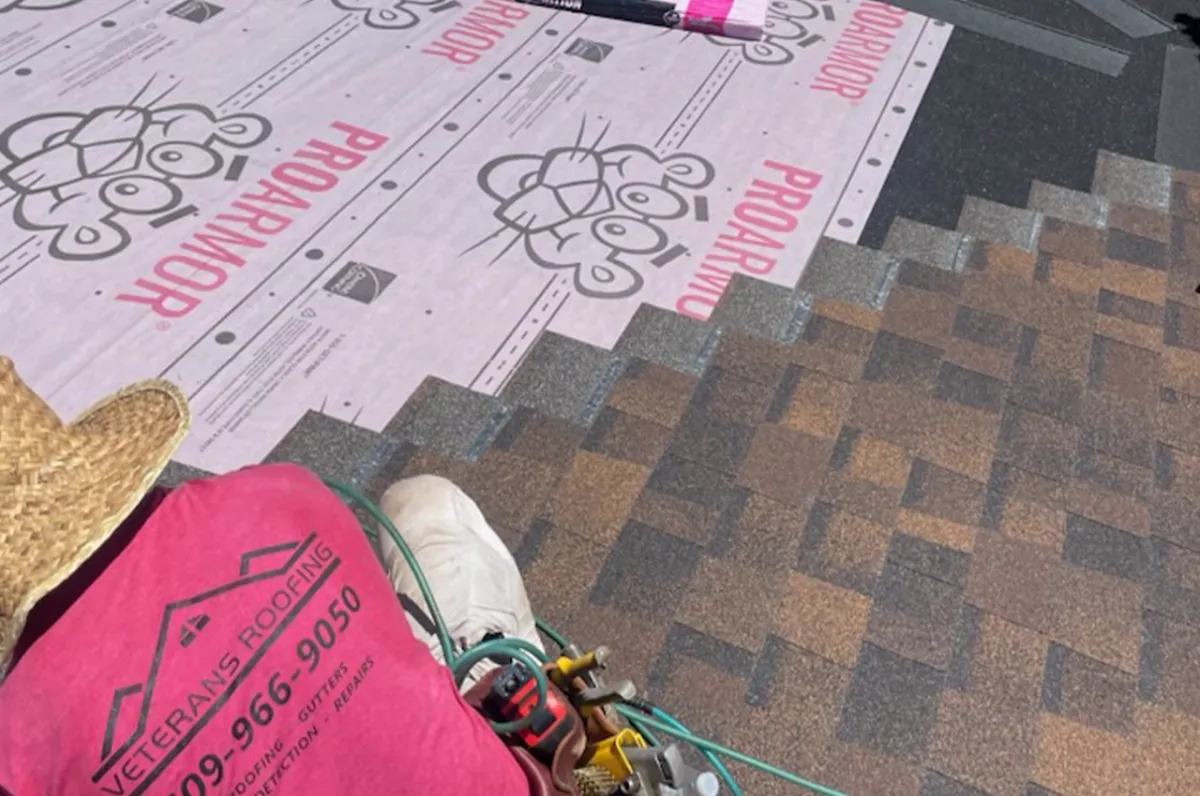
As an Owens Corning Platinum Preferred Contractor, a designation held by less than 1% of roofing companies nationwide, we install top-tier shingle systems backed by manufacturer-registered warranties. For Burlington County that means a spec built for the actual zone your home falls into. Delaware River Corridor historic-block homes often need solid-sheathing over original skip-sheathed decks plus copper or stainless flashings. Central commuter-belt subdivisions need attic ventilation rebuilds tied to the decade your block was built. Eastern Pine Barrens-edge properties need oversized 6-inch seamless gutters with pine-needle-rated guards plus algae-resistant shingles for the humid canopy microclimate. The mistake we see most often is contractors using one spec across all three zones. Commuter-belt spec on a Pine Barrens home fails inside 10 years; Pine Barrens spec on a Delaware River historic block doesn't respect the architectural lines.
Same crew from estimate to final cleanup, same number to call when something needs a follow-up. Free in-home inspections, same-week scheduling, and same-day emergency response are standard for every Burlington County address, river corridor to Pine Barrens.